
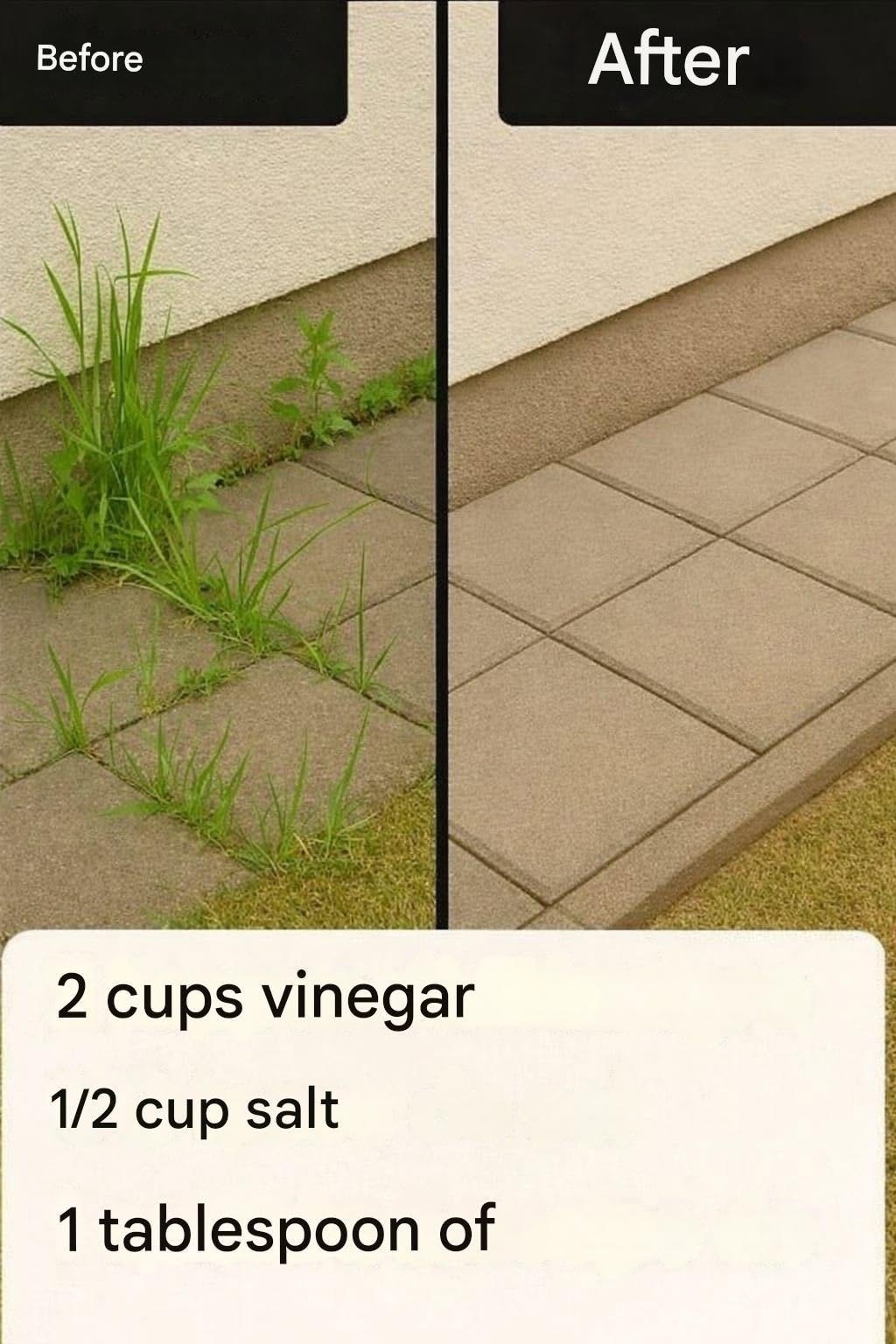
Will this kill weeds permanently?
No. It kills the foliage it touches but doesn’t always destroy deep roots. Perennial weeds often regrow, requiring reapplication or root removal.
Can I use apple cider vinegar instead of white vinegar?
Yes, but white vinegar typically has a more consistent acetic acid concentration. Apple cider vinegar may contain residual sugars that could feed soil microbes.
How long does it take to work?
Wilting often appears within 2–24 hours on sunny days. Complete browning may take 2–3 days. Speed depends on weed type, size, and weather conditions.
Will this harm my pets or wildlife?
Once completely dry, residue poses low risk. Keep pets away during application and drying. Avoid spraying near bird feeders or active wildlife habitats.
Can I use this on my lawn?
Not recommended. It’s non-selective and will kill grass. For lawn weeds, use turf-safe selective herbicides or manual removal.
Does the salt stay in the soil forever?
Salt doesn’t vanish, but it can leach away with heavy rain or irrigation over weeks to months. Repeated applications, however, can build up salt levels and harm future plantings.
Can I add more salt to make it stronger?
Not advisable. Excess salt increases soil damage risk without significantly improving weed kill. Focus on thorough, even coverage instead.
Is horticultural vinegar (20% acetic acid) safer or more effective?
It’s far more effective on tough weeds but requires serious precautions: goggles, heavy gloves, long sleeves, and careful handling. It can cause severe eye and skin burns. Not recommended for casual DIY use.
Will rain wash this away?
Yes. Apply only when no rain is forecast for at least 24 hours. Rain shortly after application drastically reduces effectiveness.
Can I use this in my vegetable garden?
Strongly discouraged. Salt can persist in soil and harm future crops. Use manual removal, mulching, or approved organic methods instead.
Quick-Reference Action Plan
Before You Mix: Assess & Prepare
Identify the weeds: Are they young annuals or deep-rooted perennials?
Check the location: Hard surface (suitable) or garden bed (avoid)?
Review the weather forecast: Aim for a sunny, dry, windless day.
Gather protective gear: Gloves, eye protection, long sleeves.
Mixing & Application: Safety First
Mix in a well-ventilated area and label the container clearly.
Test on a small area first to verify surface compatibility.
Apply precisely, avoiding desirable plants and water sources.
Allow the area to dry completely before allowing children or pets access.
After Application: Monitor & Maintain
Check results in 2–3 days. Reapply if needed, waiting 3–5 days between applications.
For persistent weeds, consider manual root removal or alternative methods.
Improve long-term prevention: Mulch bare soil, plant dense ground covers, maintain healthy soil.
Store leftover solution labeled and out of reach. Dispose of unused portions properly.
Ongoing: Sustainable Weed Management
Focus on prevention: Healthy soil and dense plantings naturally suppress weeds.
Use chemical solutions (even DIY) as a targeted last resort, not a first response.
Rotate methods to avoid soil degradation or unintended damage.
Remember: A few weeds are normal—and often beneficial for pollinators.
Progress, not perfection. One mindful choice at a time.
A Compassionate Mindset: Stewardship Without Shame
It’s easy to feel frustrated by weeds—or guilty about using any kind of herbicide. Please hold this truth gently:
You are not failing because weeds grow.
Weeds are nature’s way of covering bare soil. They’re opportunistic, resilient, and often misunderstood. Managing them isn’t about eradication. It’s about balance—caring for the spaces you love while respecting the larger ecosystem.
If you choose to use this homemade herbicide for a stubborn driveway weed, do it with intention. If you choose to pull by hand or mulch instead, that’s equally valid. What matters isn’t any single method. It’s the overall pattern of care, awareness, and respect for your home and the earth.
Affirmation: “I care for my space with wisdom, not worry. I choose methods that align with my values—and I forgive myself for imperfection.”
Final Thought: The Quiet Wisdom of Working With Nature
Weeds aren’t enemies. They’re teachers.
They show us where soil is bare, where water pools, where balance is needed. The most sustainable gardens aren’t weed-free. They’re resilient—designed to thrive with minimal intervention.
The next time you spot a weed, pause. Ask yourself: Why is this growing here? What does this space need? Then respond—not with frustration, but with curiosity.
Because the best weed management isn’t about control. It’s about connection.
“The goal isn’t a perfect garden. It’s a living one.”
Have you tried a homemade herbicide? What worked—or didn’t—for your space? Share your experience below. We’re all learning to steward our spaces, together.
ADVERTISEMENT

