
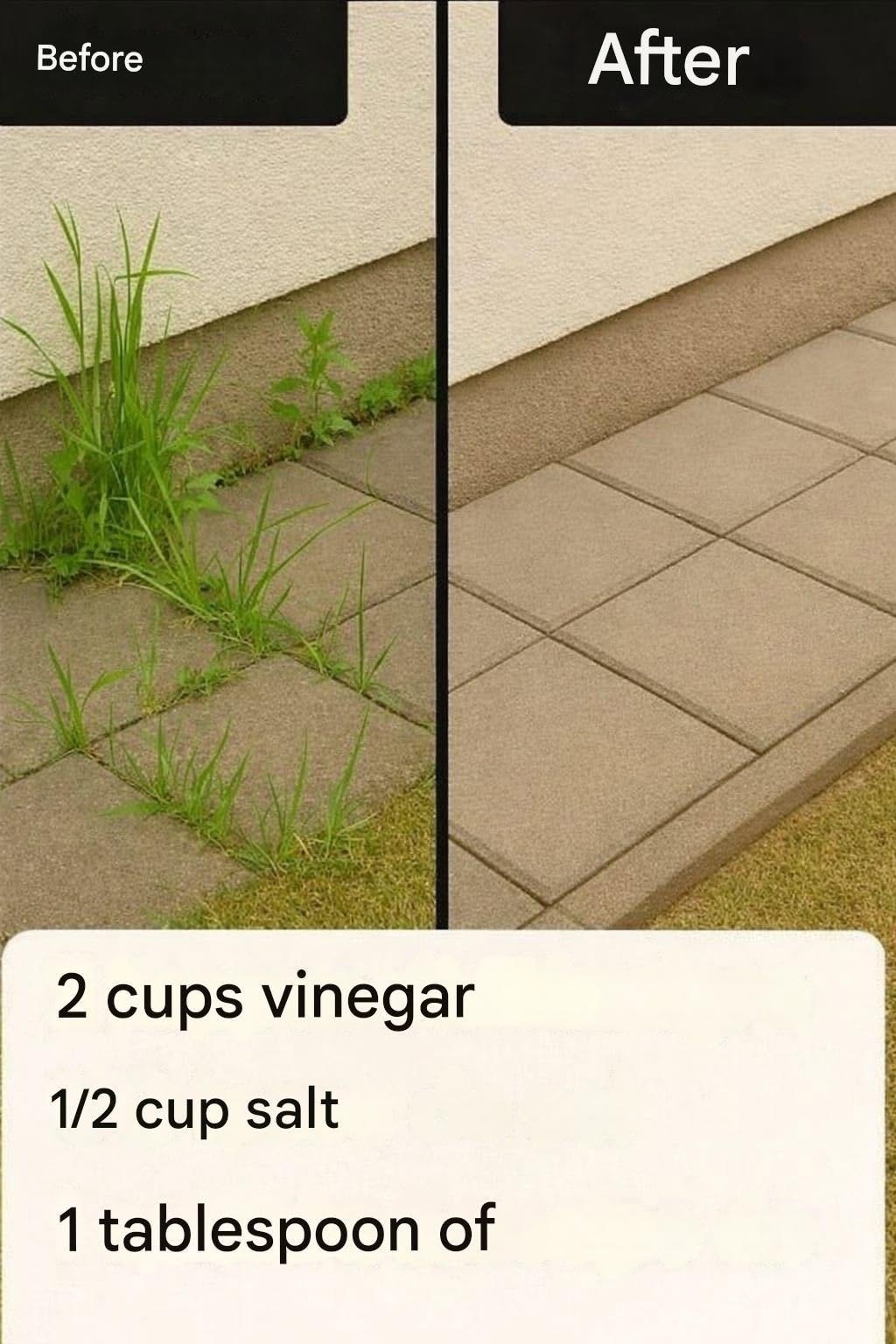
Cracks in driveways or sidewalks (non-planting areas where salt won’t harm future growth)
Gravel paths or patios (minimal soil contact, easy to target individual weeds)
Young annual weeds (thin leaves absorb the solution effectively)
Spot treatment of isolated weeds (precise application minimizes collateral damage)
Budget-conscious weed control (inexpensive ingredients, effective for small zones)
When to Avoid It:
Garden beds with flowers or vegetables → Hand-pull, mulch, or use corn gluten meal
Lawns or near grass → Use selective turf-safe herbicides or manual removal
Near trees or shrubs → Salt can damage root systems; use mulch or hand-pulling
Perennial or deep-rooted weeds → Dig out roots or consider targeted systemic options
Large infestations → Seek professional evaluation or integrated weed management
Organic-certified gardens → Salt is not permitted in organic production
Compassionate reminder: Weeds are often symptoms, not the problem itself. They thrive where soil is disturbed, bare, or unbalanced. Improving soil health and planting dense ground covers naturally reduces weed pressure over time.
Eco-Friendly Alternatives to Consider
For Hard Surfaces (Driveways, Patios):
Boiling water: Scalds plant tissues on contact. Chemical-free and immediate, but may require repeats. Handle with extreme caution.
Flame weeder (propane torch): Heat ruptures plant cells. Fast and chemical-free, but carries fire risk and should never be used in dry areas.
Manual removal (hoe, scraper): Physically removes weeds. Precise with zero residue, but labor-intensive and may miss deep roots.
Corn gluten meal: Pre-emergent that inhibits seed germination. Organic and feeds soil, but only prevents new weeds and is highly timing-sensitive.
For Garden Beds:
Mulching (wood chips, straw): Blocks light and suppresses weed seeds while improving soil and retaining moisture. Requires initial cost and periodic replenishment.
Hand-pulling (after rain): Removes weeds with roots. Precise and chemical-free, but time-consuming.
Vinegar-only spot treatment: Acetic acid desiccates foliage without salt. Breaks down quickly but is less potent.
Soil solarization: Clear plastic traps heat to kill weeds and seeds. Chemical-free and effective, but takes weeks and isn’t suitable for established gardens.
Key insight: The most sustainable weed management combines multiple strategies: prevention (mulch, dense planting), mechanical removal, and targeted treatments only when truly necessary.
Frequently Asked Questions

