
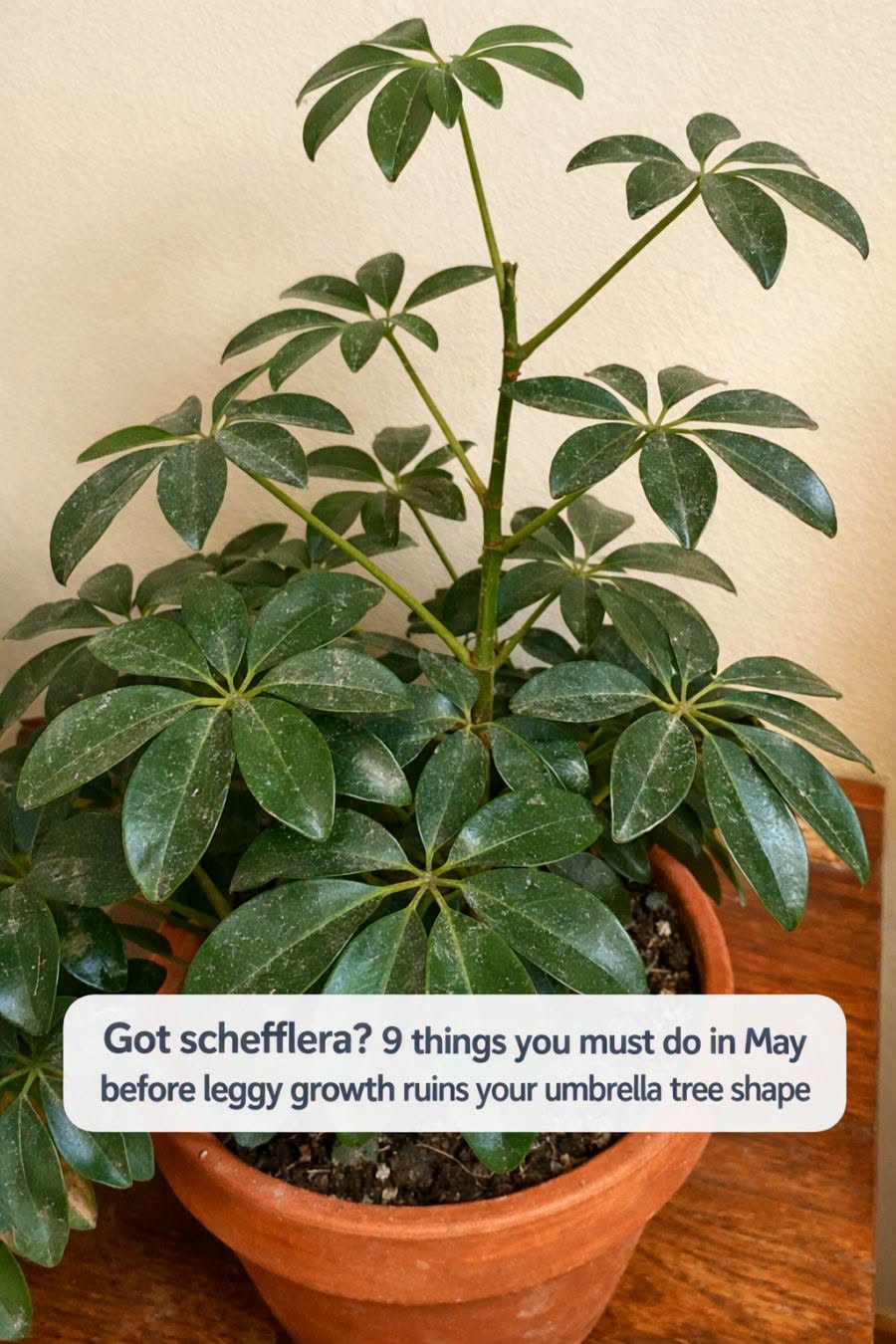
3. Pinch New Tips to Encourage Bushy, Compact Branching
Pinching is a gentler alternative to pruning, ideal for encouraging dense growth without removing large sections of the plant. Once new growth begins in May, use your fingers to gently pinch off the tips of the stems. This technique encourages the plant to redirect energy from vertical growth to lateral branching.
By consistently pinching back new tips, you’ll help your schefflera develop a more compact, rounded form. This practice is especially beneficial for younger plants or those that have recently been pruned heavily.
4. Rotate the Pot Weekly So All Sides Get Even Spring Light
Schefflera plants are phototropic, meaning they naturally grow towards the light source. Inconsistent lighting can lead to a lopsided plant as it stretches in one direction. To prevent this, rotate your schefflera a quarter turn each week. This simple practice ensures that all sides receive equal exposure to sunlight, promoting balanced growth.
If your plant is located near a window, ensure that the light is not too intense, as this can scorch the leaves. A sheer curtain can help diffuse direct sunlight, providing the perfect amount of illumination without causing damage.
5. Upgrade the Light Situation to Prevent Future Stretching
Leggy growth in schefflera is often a result of insufficient light. If your plant is in a dimly lit area, consider moving it to a brighter spot. Ideal locations include east or west-facing windows where the plant can receive bright, indirect light for several hours a day.
If natural light is limited, supplement with artificial grow lights. Position the lights 12-18 inches above the plant, and keep them on for approximately 12-14 hours a day. This will mimic the natural daylight cycle and encourage healthier, more robust growth.
6. Repot or Refresh Soil to Fuel Strong, Sturdy New Growth
May is an excellent time to repot your schefflera if it has outgrown its current container. Choose a pot that is 1-2 inches larger in diameter and ensure it has adequate drainage holes. Use a well-draining potting mix, such as one that is specifically formulated for tropical plants.
If repotting isn’t necessary, consider refreshing the top layer of soil. Gently remove the top 1-2 inches of old soil and replace it with fresh mix. This will provide your plant with additional nutrients and improve aeration, promoting vigorous growth during the spring and summer months.
7. Dial In Watering and Humidity for Thick, Healthy Foliage
Proper watering is crucial to maintaining the health of your schefflera. Allow the top inch of soil to dry out between waterings, and then water thoroughly until it drains from the bottom. Avoid letting your plant sit in water, as this can lead to root rot.
In addition to watering, monitor the humidity levels in your home. Schefflera thrives in moderate to high humidity. If the air is dry, consider misting the leaves regularly or placing a humidifier nearby. Grouping plants together can also help increase local humidity levels.
8. Feed Lightly in May to Support Dense, Not Spindly, Growth
As the growing season begins, your schefflera will benefit from a light feeding. Use a balanced, water-soluble fertilizer diluted to half strength, applying it every 4-6 weeks. This will provide the necessary nutrients for robust growth without encouraging spindly, overextended stems.
Avoid over-fertilizing, as this can lead to salt build-up in the soil and damage the roots. Regularly flush the soil with clear water to prevent nutrient accumulation and ensure your plant remains healthy and vigorous.
9. Stake, Clean, and Inspect to Keep Your Umbrella Tree in Top Form
To maintain the structural integrity of your schefflera, consider staking any particularly tall or weak stems. Use a bamboo stake or similar support, and gently tie the stem with soft plant ties to avoid damaging the plant.
Regularly clean the leaves with a damp cloth to remove dust, which can block light and hinder photosynthesis. While cleaning, inspect the plant for signs of pests such as spider mites or aphids. Early detection is key to preventing infestations, so treat any issues promptly with insecticidal soap or neem oil.
ADVERTISEMENT

