
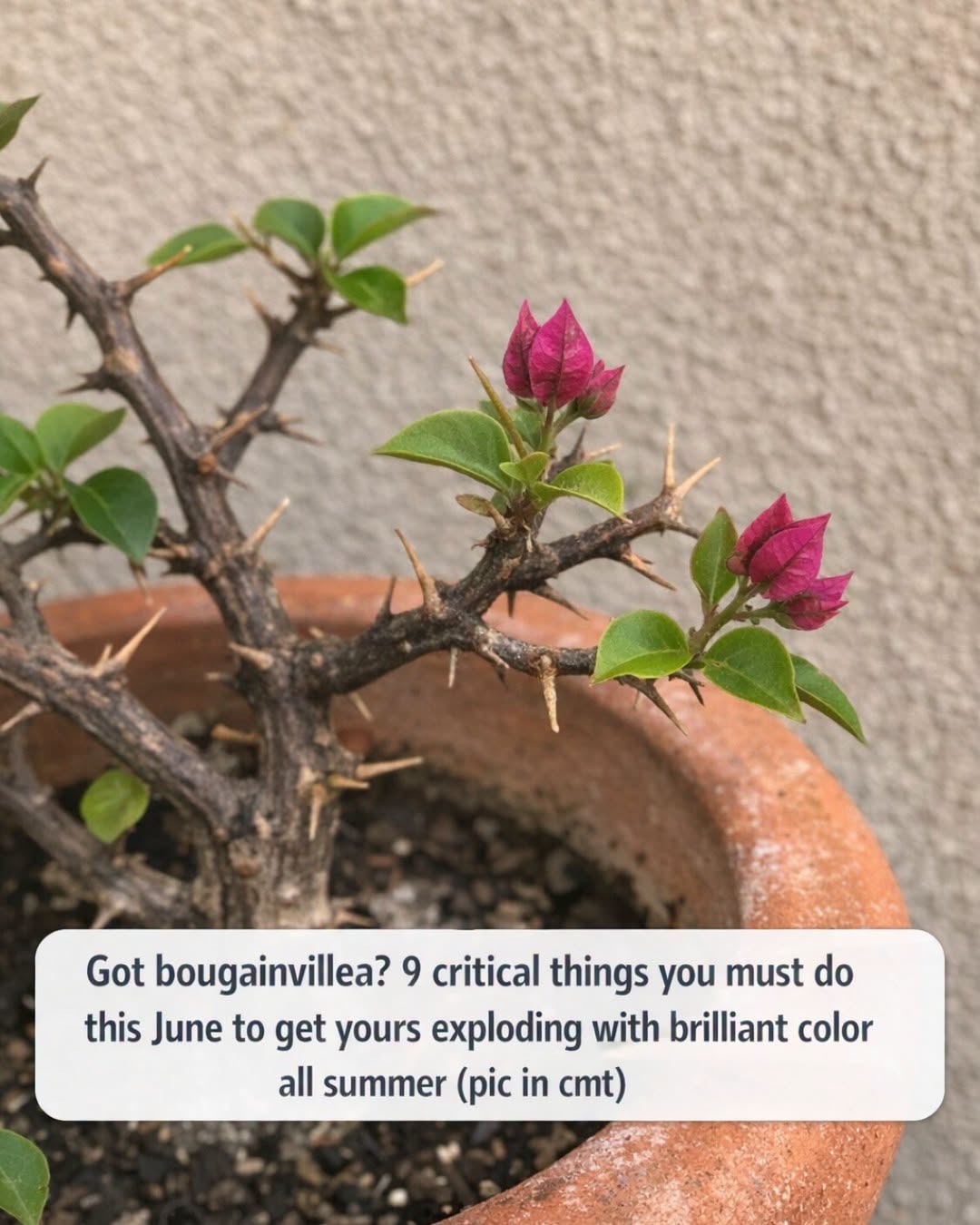
Deadheading bougainvillea is not as formal as deadheading petunias, but cleaning it up in June can keep it looking fresh and push energy into stronger growth. Pinch or snip off faded flower clusters and papery bracts when they begin to brown and lose color. Also remove thin, weak stems in the crowded interior where light and air barely reach.
This improves airflow, which matters in humid weather, and helps the plant direct energy toward healthier shoots. Do not strip it bare. Just tidy selectively. I usually step back every few cuts and make sure I am improving the shape rather than fussing for fussing’s sake.
11. Protect it from late cold snaps and wild temperature swings
In some regions, especially where weather has become downright contrary, early June can still surprise you with a cool night. Bougainvillea begins to sulk when temperatures drop below about 50 degrees Fahrenheit, and growth can stall below 60. If a chilly spell is forecast, move potted plants against a warm wall or indoors overnight if possible.
For large containers too heavy to move, wrap the pot with burlap or an old blanket to protect roots, and cover the top growth with frost cloth if temperatures threaten to dip into the 40s. Remove covers in the morning once temperatures rise. Cold stress in June can set blooming back just when the plant ought to be gearing up for its best show.
12. Do not pile mulch against the crown
I am a great believer in mulch in the right place. In my garden, mulch saves moisture, softens weeds, and keeps roots steadier in summer heat. But with bougainvillea, especially in the ground, keep mulch 2 to 3 inches away from the base of the main stem. Piling mulch against the crown can trap excess moisture and invite rot.
If you mulch, use a light 1- to 2-inch layer of bark, pine straw, or gravel over the root area, but not right up on the trunk. In very dry regions, this helps moderate moisture swings. In humid regions, go especially light so the root zone still breathes.
13. Give container plants a mid-month soil check
By mid to late June, potted bougainvillea can become hydrophobic, meaning the soil gets so dry it starts shedding water rather than absorbing it. You pour, and the water runs down the sides and out the bottom while the root ball stays dry in the middle. That leads to stress, leaf drop, and bud drop.
Once in June, test this by watering slowly. If water channels through too fast, set the pot in a tub or deep tray with 2 to 3 inches of water for 20 to 30 minutes, then let it drain thoroughly. This rehydrates the root ball evenly. Do not make a habit of leaving it soaking, but one corrective soak can make a big difference.
14. Match your care to your variety and climate
Not all bougainvillea behave exactly alike. Dwarf kinds in hanging baskets dry out much faster than large vigorous climbers on a wall. Purple Queen, Barbara Karst, California Gold, Torch Glow, and other common varieties all have slightly different growth habits and bloom rhythms. June care should reflect that.
If you live in a hot, arid climate, your main June task is balancing intense sun with proper deep watering. If you live in a humid coastal or subtropical area, your focus may be drainage, airflow, and not overfeeding. If you are growing bougainvillea as a seasonal patio plant in a cooler zone, getting every bit of sun and warmth you can is half the battle.
I always tell folks to pay attention to the plant in front of them, not just the tag it came with. Gardening wisdom starts with advice, but it matures with observation.
15. Avoid the three June mistakes that ruin summer color
If I had to narrow it down, the biggest June mistakes are these: too much water, too much nitrogen, and too little sun. Those three together will give you a handsome green plant that never quite performs. Runner-up mistakes include repotting into an enormous container, hard pruning at the wrong time, and ignoring drainage after heavy rain.
So if your bougainvillea is disappointing you, do not start by adding more products. Start by checking the basics. Count the hours of direct sun. Probe the soil before watering. Read the fertilizer label. Inspect the pot drainage holes. Those simple checks solve more bougainvillea problems than fancy remedies ever will.
16. Make a simple June routine and stick to it
The easiest way to get brilliant color all summer is to turn bougainvillea care into a small, regular habit. In my own garden notebook, a June bougainvillea routine would look like this: check soil moisture every 2 to 3 days, fertilize lightly every 2 to 3 weeks if blooming is active, inspect for pests once a week, tie new shoots as needed, and do a light tidy-up after each flush of color.
That is not a burdensome routine, and that is part of the beauty of this plant. Once you understand it, bougainvillea asks less of you than many summer bloomers. It wants sunshine, restraint, and a little respect. Give it those things in June, and by July and August it can reward you with the kind of color that stops neighbors at the gate and makes you feel, for a moment, like you have done something downright magical.
ADVERTISEMENT

